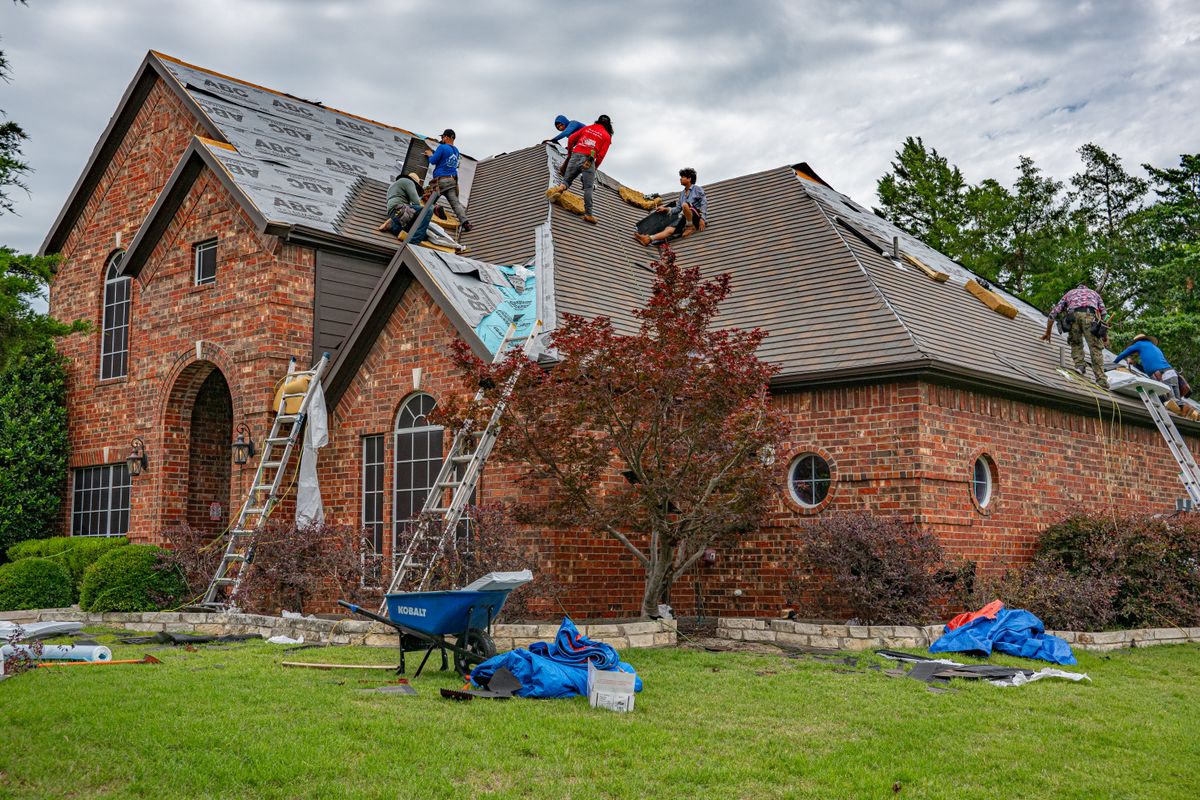
Choosing a roofing material for your Texas home is one of the most consequential home improvement decisions you'll make. Unlike in more temperate climates, where most standard roofing products perform adequately, Texas presents a combination of environmental challenges that genuinely separates good roofing choices from poor ones. Make the right call and your new roof will protect your family for 25–50+ years. Make the wrong call and you'll be replacing it again in 12–15.
This guide covers every major roofing material option available to DFW homeowners, evaluates each against the specific demands of our climate, and gives you the framework to make a confident, informed decision.
Understanding Texas's Roofing Challenges
Before comparing materials, it's worth understanding exactly what conditions your new roof will face in North Texas:
- Extreme heat and UV: DFW averages over 230 sunny days per year. Summer temperatures regularly exceed 100°F, and asphalt surfaces can reach 160–170°F in direct sun. UV radiation breaks down organic materials, oxidizes asphalt, and degrades sealants over time.
- Hail frequency: The DFW corridor sits in one of the highest hail frequency zones in the United States. Storms producing 1-inch or larger hailstones occur multiple times per year in some seasons. The April–June period is especially active.
- High winds: Severe thunderstorms, straight-line winds, and occasional tornado events can produce gusts of 70–100+ mph in isolated areas. Properly rated wind resistance is essential.
- Thermal cycling: Summer temperatures above 100°F followed by winter lows occasionally below 20°F create dramatic expansion and contraction cycles that stress roofing materials and fasteners.
- Heavy rain events: When Texas storms hit, they often dump 2–4 inches of rain in a matter of hours. Proper drainage, slope, and underlayment systems matter greatly.
Architectural Asphalt Shingles: The Standard Choice
Lifespan in Texas: 20–25 years with proper installation and maintenance
Cost range: $8,000–$16,000 for a typical DFW home (installed)
Best for: Most residential homeowners seeking a balance of performance, aesthetics, and value
Architectural (dimensional) shingles dominate the Texas residential roofing market for good reason. They offer acceptable performance in our climate, broad color and style options, and a price point that makes them accessible to most budgets. However, in Texas, the specification of the shingle matters enormously.
What to look for in Texas:
- Impact resistance rating: Seek Class 3 (1.75-inch steel ball) or Class 4 (2-inch steel ball) rated shingles. Class 4 shingles - like GAF Armor Shield II, CertainTeed Landmark IR, or Owens Corning Duration Storm - can qualify you for homeowner's insurance discounts of 20–35% in Texas, which often pays for the upgrade premium within 3–5 years.
- Wind rating: Look for shingles rated for 110 mph or higher. Premium shingles often carry 130 mph ratings.
- Algae resistance: Choose shingles with copper granule technology for resistance to the algae streaking common in humid Texas conditions.
- Warranty: A meaningful manufacturer warranty (Lifetime limited on the shingle itself, plus a separate wind and workmanship warranty) indicates a quality product.
Metal Roofing: The Premium Long-Term Choice
Lifespan in Texas: 40–70 years
Cost range: $18,000–$45,000 for a typical DFW home (installed), depending on system type
Best for: Homeowners planning to stay long-term, those prioritizing energy efficiency, or those who want to eliminate re-roofing costs for a generation
Metal roofing's value proposition in Texas is compelling when you calculate total lifecycle cost. While the upfront investment is 2–3x that of asphalt shingles, a standing seam metal roof installed today will likely outlast a second asphalt shingle replacement - meaning you're paying once instead of twice over a 40-year period.
Metal roofing options for Texas homes:
- Standing seam steel or aluminum: The premium option. Concealed fasteners eliminate penetration points; the floating panel system accommodates Texas's dramatic thermal expansion. Rated for 120–140+ mph winds. Highly resistant to hail. Energy Star-rated options reflect 25–40% of solar radiation.
- Stone-coated steel shingles: A middle-ground option that looks like asphalt or tile but provides metal's durability. More affordable than standing seam, still rated for 50+ years and 120 mph winds. Excellent for homeowners who prefer a traditional aesthetic with improved performance.
- Corrugated metal panels: More common in agricultural and light commercial applications, but occasionally used on modern residential designs. Very cost-effective but with exposed fasteners that require monitoring.
Texas-specific considerations for metal roofing: choose Galvalume or aluminum for coastal areas to avoid salt-related corrosion; specify a Kynar 500 or Hylar 5000 paint finish for maximum UV resistance; and ensure your contractor uses proper thermal expansion clips and sealants on all penetrations.
Clay and Concrete Tile: Elegance for the Long Haul
Lifespan in Texas: 40–50+ years (clay); 30–50 years (concrete)
Cost range: $20,000–$50,000+ installed
Best for: Homes with Spanish, Mediterranean, or Southwestern architecture; long-term homeowners prioritizing aesthetics and durability
Tile roofing is a natural fit for Texas's climate in many ways. Clay tile, fired at high temperatures, is essentially impervious to moisture, UV radiation, and heat. It's Class A fire-rated, doesn't rot, and doesn't support algae or mold growth. Well-maintained clay tile roofs in Texas regularly last 50 years.
The primary concern with tile in DFW is hail susceptibility. While tile handles heat and wind beautifully, large hailstones (1.5 inches and larger) can crack and break tiles. Impact-resistant tile products are available - including concrete tile with polymer reinforcement - but even these carry lower impact ratings than Class 4 asphalt shingles. If you live in a high-hail-frequency area, discuss hail risk specifically with your contractor before choosing tile.
Also critical: tile is heavy (9–12 pounds per square foot versus 2–4 for asphalt), and your home's structure must be engineered or reinforced to support the load. Never install tile on a structure not designed for it.
TPO and Flat Roofing Systems
Lifespan in Texas: 15–25 years
Cost range: Varies widely by building size; typically $6–$12 per square foot installed
Best for: Commercial buildings, low-slope residential sections, home additions
TPO (thermoplastic polyolefin) has become the dominant flat roofing material for commercial buildings in DFW - and for good reason. Its white surface reflects solar radiation effectively (important for Texas commercial buildings' cooling loads), and its heat-welded seams create an essentially waterproof membrane when properly installed. TPO is relatively lightweight, resistant to UV degradation, and performs well in the freeze-thaw cycles DFW occasionally experiences.
Proper installation is everything with flat roofing. The slope must be adequate to drain (even "flat" roofs should have a minimum pitch of 1/4 inch per foot), penetrations must be perfectly sealed, and drains must be kept clear. Annual inspections are strongly recommended for flat roof systems.
Making Your Decision: A Framework
When evaluating roofing materials for your Texas home, work through these questions:
- How long do you plan to stay? If 5–10 years, asphalt provides good value. If 20+ years, metal or tile's lifecycle economics often make them the smarter choice.
- What is your hail risk tolerance? In north DFW suburbs like Frisco, McKinney, Allen, and Celina, hail frequency is high. Class 4 shingles or metal are the defensible choices.
- What does your neighborhood look like? HOA requirements and neighborhood aesthetics matter. Confirm material restrictions with your HOA before committing.
- What are your energy efficiency goals? Metal and cool-roof rated shingles can meaningfully reduce summer cooling costs. Quantify potential savings before dismissing the premium.
- What can your structure support? Tile and certain other heavy materials require structural assessment first.
Commit Roofing's estimators will assess your home's structure, your neighborhood context, your budget, and your long-term goals to give you a clear recommendation - not a sales pitch. We're certified installers for GAF, CertainTeed, Owens Corning, and several metal roofing manufacturers. Contact us today for a free consultation and material comparison for your specific home.