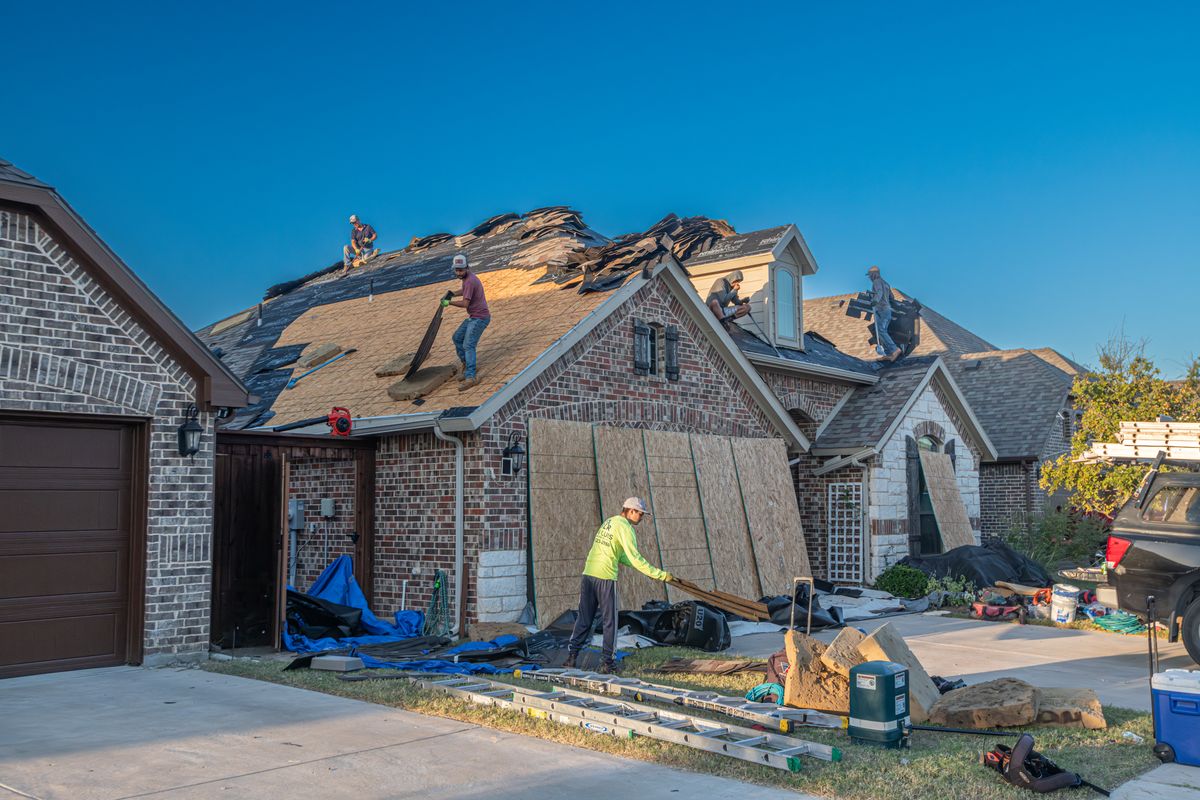
Receiving a roofing estimate for the first time can feel overwhelming. The document is filled with line items, material specifications, and terms you may not recognize - and in the context of storm damage and insurance claims, the financial stakes are significant. Signing the wrong contract, with the wrong contractor, at the wrong price, can cost you far more than the roof itself.
This guide gives Dallas-area homeowners a complete, plain-language walkthrough of what a proper roofing estimate should contain, what warning signs to watch for, how to compare competing bids fairly, and what questions to ask before you sign anything.
What a Complete, Professional Roofing Estimate Must Include
A legitimate, professional roofing estimate is a comprehensive document, not a number on a napkin or a verbal ballpark. Here is what should be explicitly stated in any written estimate you receive:
Company Information
- Business name and physical address (not just a P.O. box)
- Texas roofing contractor license number (verifiable at the TDLR website)
- General liability insurance certificate, showing coverage amounts
- Workers' compensation insurance certificate
- Contact name and direct phone number
Scope of Work
The scope section should read like an instruction manual - specific enough that a different contractor could pick up the estimate and know exactly what was agreed to. This includes:
- Whether existing shingles will be torn off (they should be, in almost all cases - multiple layers are a code violation in most Texas jurisdictions and dramatically shorten the new roof's lifespan)
- Inspection of the roof deck after tear-off, and pricing for deck board replacement if needed
- Specific underlayment type and brand (synthetic felt vs. traditional felt vs. ice and water shield)
- Whether drip edge will be installed or replaced (it should be on every replacement)
- Ridge vent or other ventilation work included
- Flashing treatment - new flashing at chimneys, skylights, and walls, or re-use of existing
- Starter strip specification
- Ridge cap shingles - high-profile hip and ridge cap vs. cut-down field shingles
Materials Specifications
For every material component, the estimate should specify:
- Manufacturer name and exact product line (e.g., "GAF Timberline HDZ" not just "architectural shingles")
- Shingle color selected
- Impact resistance classification (Class 3 or Class 4 if applicable)
- Wind resistance rating
- Quantity - typically expressed in roofing squares (1 square = 100 square feet), with overage included
Labor Costs
Labor should be listed separately from materials so you can understand what you're paying for labor versus product. Estimates that combine these into a single number make comparison shopping difficult and obscure whether labor costs are reasonable for the scope.
Disposal and Cleanup
Tear-off generates significant debris. The estimate should explicitly confirm that debris removal, dumpster or truck haul-away, and final cleanup are included. If these are listed as separate line items or excluded, add them to your comparison cost.
Permit Costs
In Texas, most jurisdictions require a building permit for roof replacements. The estimate should address permits - either including the permit fee or explicitly stating that the homeowner is responsible. More importantly, your contractor should be pulling the permit, not asking you to do it yourself. A contractor who discourages permitting is cutting a corner that could affect your insurance coverage and home sale down the road.
Warranty Information
Two distinct warranties should be clearly stated:
- Manufacturer's material warranty: Coverage for the shingles themselves against defects and premature failure. Premium products carry Lifetime Limited warranties. Understand what "Lifetime" means - it's typically defined as the expected life of the home, not unlimited. Also note that manufacturer warranties often require certified contractor installation.
- Contractor workmanship warranty: The contractor's own warranty against installation defects. A reputable contractor should offer minimum 5–10 years on workmanship. Insist on this in writing. Verbal warranties mean nothing.
Payment Schedule
The payment structure should be explicitly defined:
- Deposit amount and when due (10–30% is typical; anything over 50% upfront is a red flag)
- Progress payment triggers, if any
- Final payment amount and trigger (typically upon completion and your satisfaction)
- Accepted payment methods
Timeline
Estimated start date and approximate completion timeline. For a typical residential re-roof, 1–2 days of work on the roof itself is standard, but scheduling, material procurement, and permit processing extend the overall timeline. Get a realistic estimate, not a too-good-to-be-true promise.
Red Flags That Should Stop You From Signing
After reviewing dozens of estimates from Texas roofing contractors, here are the most common red flags:
- An unusually low price with no detailed breakdown. A suspiciously low bid almost always means something is being omitted - often tear-off, proper underlayment, full flashing replacement, or adequate ventilation. You will pay for the omission later.
- Requesting full payment or a very large deposit upfront. Legitimate contractors have supplier accounts and don't need your full payment before work begins. A deposit of 10–30% is standard; 50%+ upfront is a warning sign.
- No physical address or license number in the estimate. Out-of-town "storm chasers" who appear after major weather events often have no local presence or accountability. Always verify a contractor's Texas license and look them up at the TDLR.
- Pressure to sign immediately or "this price expires today." Pricing urgency tactics are a manipulation technique. A professional contractor will give you time to review, compare, and ask questions.
- No written workmanship warranty. If the contractor won't put a workmanship warranty in writing, they're signaling low confidence in their installation quality.
- Offering to waive your deductible. In Texas, it is illegal for a contractor to waive a homeowner's insurance deductible. Any contractor making this offer is committing insurance fraud and is not a contractor you want working on your home.
- Requesting an Assignment of Benefits (AOB). This document transfers your insurance claim rights to the contractor. Signing it removes your control over the settlement and the repair process.
How to Compare Multiple Estimates Fairly
When comparing bids, resist the temptation to simply compare bottom-line numbers. Two estimates for the same roof can vary dramatically because they're scoping entirely different levels of work. To compare apples to apples:
- Confirm that all estimates include full tear-off of existing material
- Compare the exact shingle products specified (manufacturer, product line, impact rating)
- Check that underlayment specifications are equivalent (synthetic vs. felt is a meaningful quality difference)
- Confirm flashing treatment is the same across estimates (new vs. reused)
- Verify that disposal, cleanup, and permits are either all included or all excluded
- Compare workmanship warranty terms side by side
After normalizing for scope differences, a legitimate price variance of 10–20% between qualified contractors is normal and reflects different overhead structures, material buy rates, and labor costs. A variance of 40%+ between otherwise comparable estimates usually indicates a problem with the lower bid.
Questions to Ask Every Contractor Before Signing
- Are you licensed as a roofing contractor in Texas, and can I have your license number to verify?
- Do you carry general liability and workers' compensation insurance? Can I see current certificates?
- Will you pull the permit for this project?
- Who specifically will be on my roof - your own employees, or subcontractors?
- Are you a certified installer for the manufacturer whose shingles you're proposing? What does that certification cover in terms of warranty?
- How long have you been operating in the Dallas area?
- Can you provide three references from projects completed in the last six months in my area?
- How do you handle unexpected deck damage found during tear-off?
- What is your process if there is damage or a problem after installation?
A contractor who answers all of these questions directly, confidently, and without frustration is a contractor worth working with. One who deflects, rushes you, or seems uncertain should give you pause.
At Commit Roofing, we provide fully itemized, transparent estimates with no hidden fees, no high-pressure tactics, and no deductible fraud. We're licensed, insured, and certified - and we'll walk through every line of your estimate with you before asking for a signature. Contact us today for your free estimate and consultation.